
A prostate ultrasound helps spot an enlarged prostate, prostatitis, cysts and other changes early — often before serious symptoms appear. Two examination methods to choose from, and the doctor’s report on the day of your visit.
 No referral needed
 Report on the day of your visit

The doctor will advise which method suits you. No referral needed; the examination can be covered by your health insurance policy — please check the terms with your insurer.
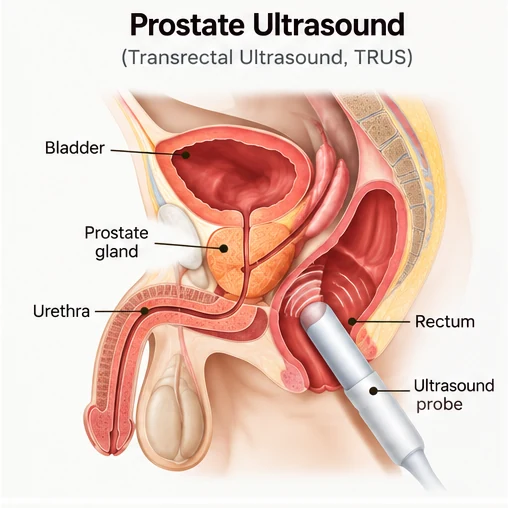
Transrectal ultrasound is the most informative method: the probe sits right next to the prostate. The doctor can precisely assess the gland’s size and structure, cysts, nodules and signs of inflammation.
How to prepare:
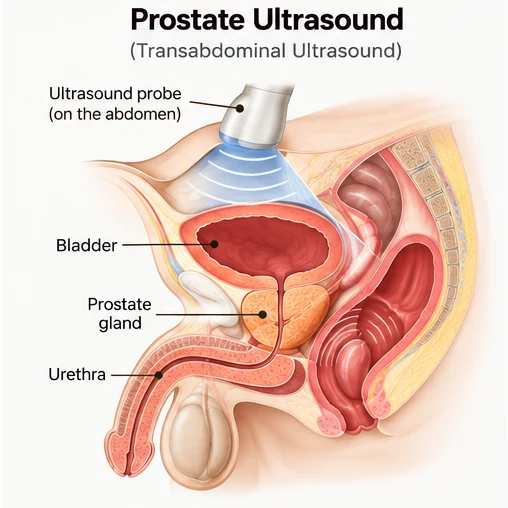
Transabdominal ultrasound through the lower abdominal wall — no discomfort. Suitable if TRUS is contraindicated or not preferred. Less detailed than TRUS, but the doctor also checks the bladder at the same time.
How to prepare:
A transabdominal prostate ultrasound and an abdominal ultrasound in one visit: liver, gallbladder, pancreas, spleen, abdominal aorta, kidneys, urinary tract and bladder. More about abdominal ultrasound.
Examinations are performed on an expert-class GE Vivid T8 ultrasound system.
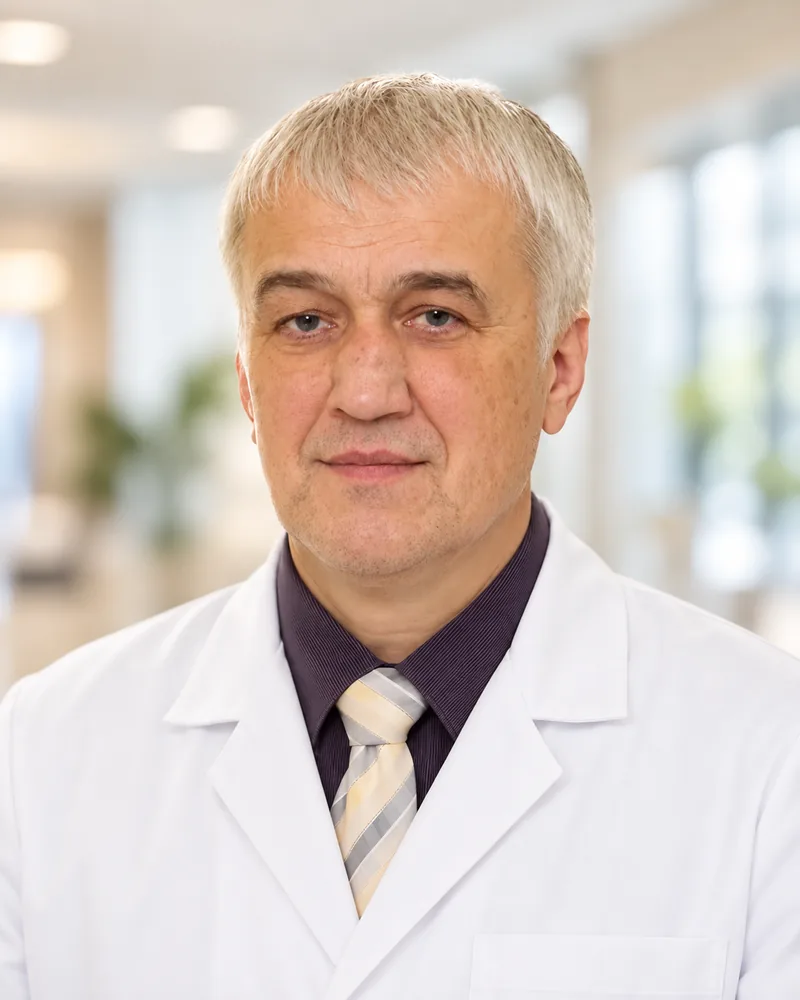
Prostate TRUS and ultrasound; abdominal, kidney and urinary tract ultrasound.
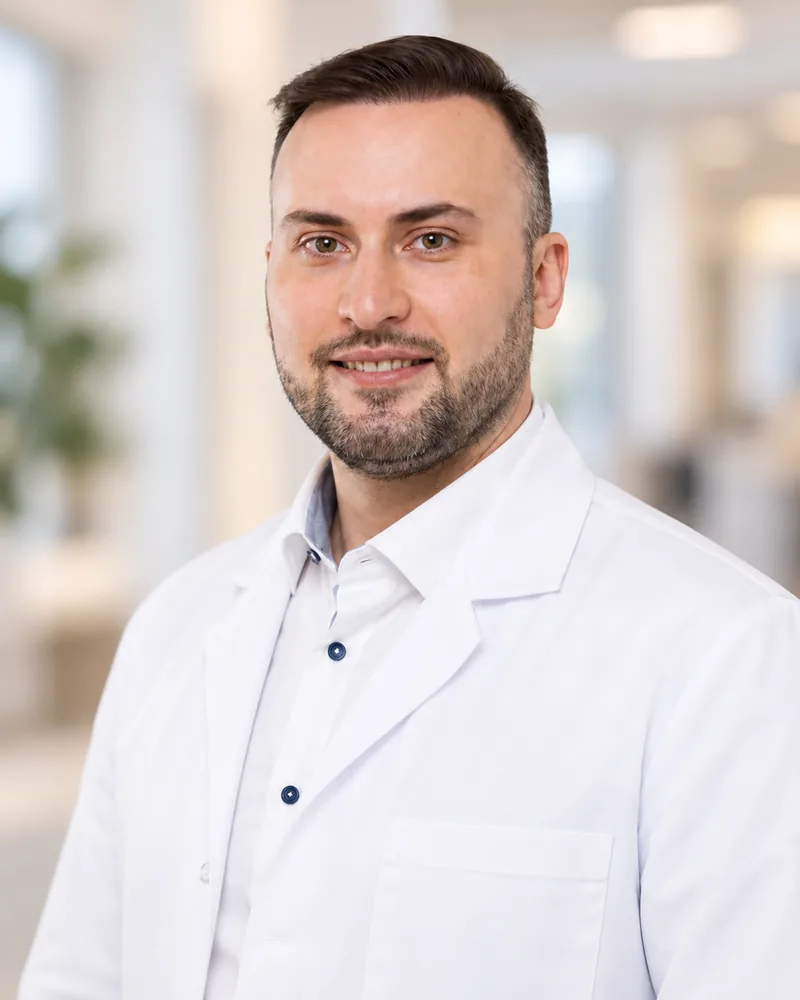
Prostate, abdomen, thyroid and salivary glands, neck soft tissues.
TRUS is a prostate ultrasound using a thin probe that is inserted through the rectum. This lets the doctor see the gland very clearly. The examination is short and safe, and is carried out with care.
The main aim of preparation is to empty the rectum. A micro-enema on the day of the examination, ideally 2–3 hours before the appointment, is recommended; repeating it the evening before is not required. Come on an empty stomach; strict fasting for 6–8 hours before TRUS is not required.
A full bladder is not needed for the transrectal examination itself. If the bladder or residual urine is being assessed at the same time, come with a moderately full bladder.
You need a moderately full bladder: drink about 1 litre of water roughly an hour before the examination and don’t empty your bladder before the appointment. No other preparation is needed.
TRUS gives the most detailed picture of the prostate, so it is chosen when precision matters — for example, with a raised PSA or for monitoring nodules. An ultrasound through the abdomen causes no discomfort and is suitable if TRUS is contraindicated or not preferred; the doctor also checks the bladder at the same time. If you’re not sure, call or message us — we’ll help you choose.
An appointment usually takes 15–20 minutes. The doctor discusses the result with you right after the examination.
Ultrasound uses sound waves, not X-rays, so it can be repeated as needed. Ultrasound through the abdomen feels like a light massage, and TRUS is quick and performed with care.
Any medical documents you have: results of previous ultrasounds, CT and MRI scans, test results (for example, PSA), doctors’ conclusions and discharge summaries. This lets the doctor assess the situation more accurately and see changes over time.
The clinic works with Balta, Seesam and BTA. The extent of cover depends on the terms of your policy — check with your insurer or with the administrator when booking.
The quickest way is the booking portal: you can see the doctors’ free slots there. Not sure which method to choose? Leave a request or call us — we’ll help you choose and book you in.
Book online
Can’t find a suitable time, or are all slots taken? Contact us — we’ll help you book an appointment.
The doctors are attentive and friendly, with an individual approach. Everything is clear, no unnecessary fuss, and the results come quickly.
A decent clinic, helpful staff and, most importantly, highly skilled specialists!

Ļauj atklāt aterosklerozi, trombus, aneirismas un citas patoloģijas. Tiek izmantota slimību diagnosticēšanai, kā arī profilaktiskajiem izmeklējumiem, īpaši cilvēkiem ar riska faktoriem.